


Advertisement | By XINENGXING
Originally published: 2026-05-26. Updated for the XINENGXING English website.
The original company account described work with an Australian self-service laundromat chain on payment access, machine availability and customer waiting times. The equipment update covered coin-operated washers, electronic-payment dryers and washer-dryer arrangements. The account highlights the following operational planning points.
Coin, QR-code and card options can serve different customer preferences. Compare the payment methods supported by the selected washer or dryer, the local service provider, connectivity, transaction fees and refund arrangements. Retaining coins alongside electronic payments also requires a collection and cash-security plan.
Compare standalone washers, separate dryers and stacked washer-dryer arrangements against the available space and expected loads. Check whether customers must transfer laundry between separate chambers. Plan capacity using actual wash and dry cycle times, rather than assuming that a higher machine count will remove queues.
Extraction affects the moisture remaining before drying. Compare the selected model's rated extraction parameters, load limits and fabric programmes; RPM alone does not establish a drying-time saving.
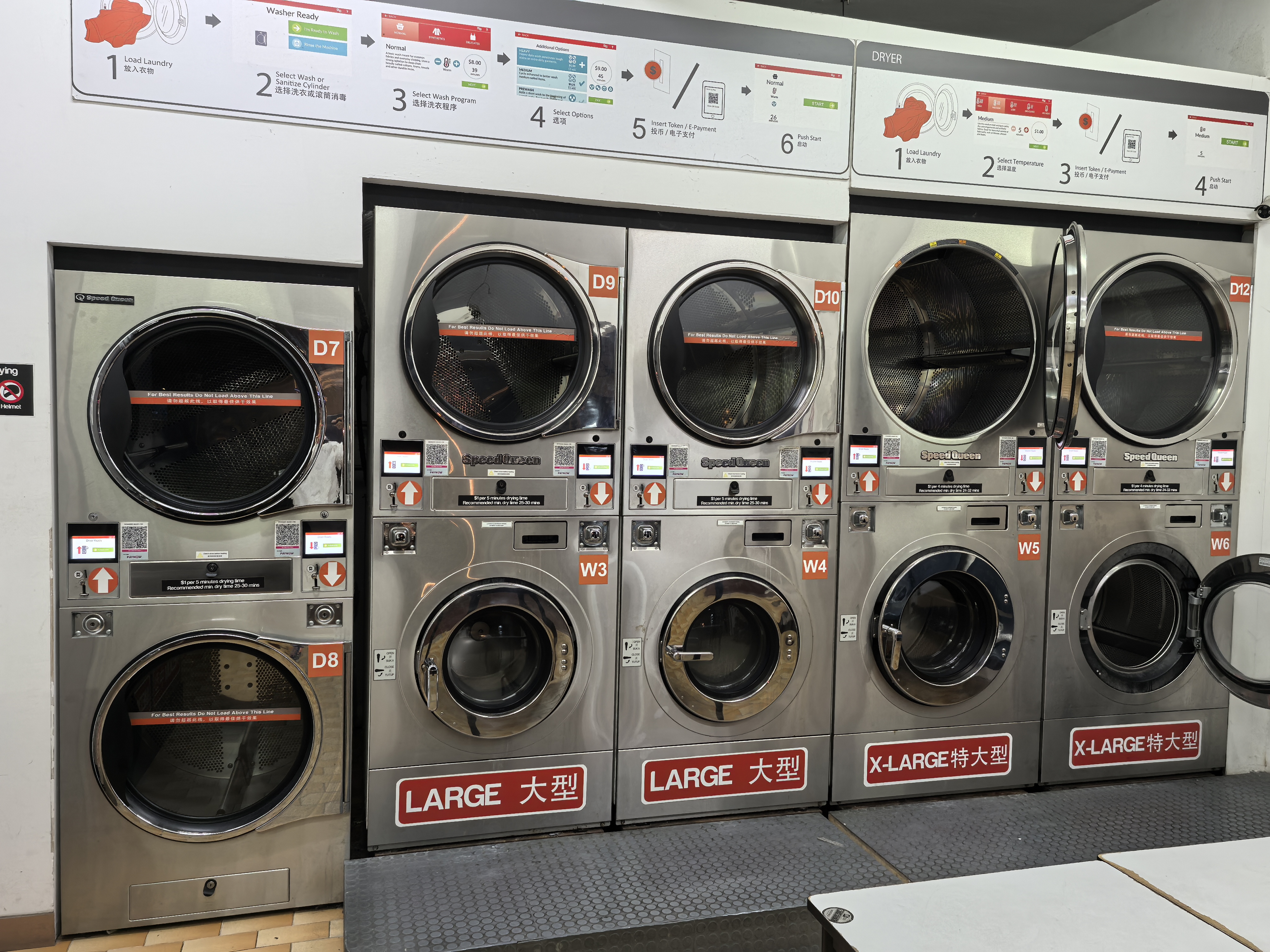
Check drum and cabinet materials alongside the model's installation and maintenance instructions. Access to spare parts, qualified servicing and clear fault-reporting procedures remains important after equipment replacement. Use repair records and actual downtime to identify which machines need attention.
Compare purchase and installation costs with utility use, payment charges, rent, staffing, maintenance and financing. Track transactions and machine availability before and after an update using consistent periods and operating conditions. Local demand, prices and costs determine financial results.
XINENGXING can discuss payment compatibility, load capacities, layout and support arrangements for a proposed laundry project.