
Industrial washer-extractors are central to hotel, hospital and commercial laundry operations. The correct machine must match daily volume, textile type, hygiene requirements, utilities and the downstream drying and finishing process.
Capacity should be calculated from kilograms per day, loading ratio, cycle time, shifts and peak demand. Oversized machines operated with partial loads may waste water, energy and chemicals.
Laundry equipment is exposed to moisture, heat and chemicals. Compare stainless-steel grades and thicknesses in the inner drum, outer drum and wet-contact areas. A full stainless-steel structure usually provides stronger corrosion resistance than a painted carbon-steel outer cabinet, although the appropriate choice depends on budget and operating conditions.
Hospitals, pharmaceutical facilities and other controlled environments may require physical separation between soiled and clean areas. A barrier washer-extractor is installed through a partition wall, with loading on the contaminated side and unloading on the clean side. Interlocked doors help prevent incorrect operation and reduce cross-contamination risk.
Variable-frequency control allows different drum speeds for wetting, washing, distribution and extraction. Effective high-speed extraction lowers residual moisture, which can reduce downstream drying time and steam consumption. Ask suppliers for verified extraction speed, G-force, cycle data and utility consumption rather than relying only on general savings claims.
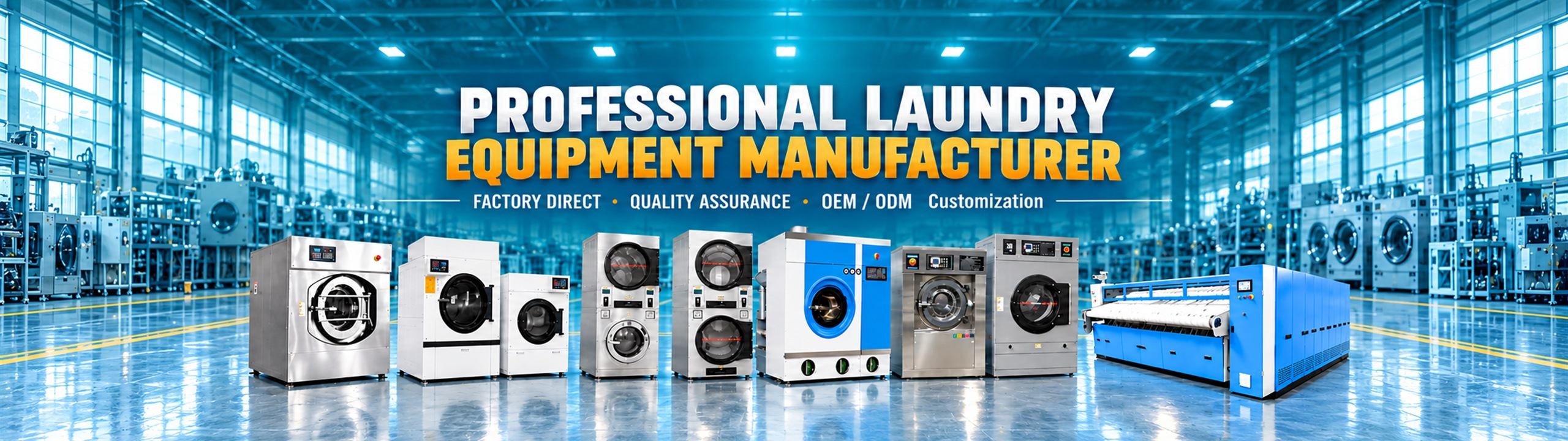
Xinengxing offers XGQ washer-extractors from 15 kg to 160 kg and can recommend a configuration based on production volume, hygiene requirements, utility supply and total lifecycle cost.