Advertisement | By XINENGXING
Originally published: 2026-08-12. Updated for the XINENGXING English website.
Self-service laundry projects vary with housing, local service habits, utility costs and customer demand. The original August 2026 market overview discussed the United States, Venezuela, Brazil, Peru, India, Australia and the United Kingdom. These examples are project-planning considerations, not an independent ranking of fast-growing or profitable markets.
For laundromats serving apartments and other shared housing, assess capacity, operating noise, available floor area and remote-management needs. XINENGXING’s product discussion includes double-deck dryers, stacked washer-dryers and shoe-washing machines.
Confirm the premises’ voltage, frequency, phase and service capacity before selecting equipment. The source mentioned 60 Hz and 220/380 V customization, but those figures must not be treated as a standard US supply specification; the actual nameplate and site supply must match.
English touchscreen panels, separate user access, startup locks and remote-management apps can be discussed where supported. Installation training and local-agent assistance depend on the agreed project and service coverage.
Assess local demand and affordability without assuming uniform conditions across countries or neighbourhoods. Portuguese or Spanish touchscreen customization can be discussed for the selected models.
Cabinet construction and vibration control should be assessed separately from electrical protection. A reinforced cabinet does not correct an unstable power supply; qualified local electrical design is required.
FOB shipment and export documentation can be arranged within the quotation. Confirm importer responsibilities, destination documentation and any customs-broker services separately.
Shared accommodation and hostel projects may require a range of machine capacities. The source highlighted 22 kg and 25 kg washer-extractors and 30 kg industrial dryers as options to discuss for larger loads.
The source also reported a ten-year relationship with Indian partners as of publication. This is company project history, rather than an independent endorsement or a guarantee of local market results.
Equipment planning should consider the premises, customer mix and local service access. For a complete store equipment purchase, commissioning, operator training and fault-reporting guidance can be included where agreed.
Any local agent’s service area, qualifications, response arrangements and spare-parts responsibilities should be confirmed before ordering.
Compact layouts may benefit from vertically stacked equipment. Compare noise and installation requirements for the actual site, and request applicable conformity documents for the exact model and destination.
Reinforced metalwork is a construction feature to assess in the specification; it is not evidence that a machine will pass every required inspection.
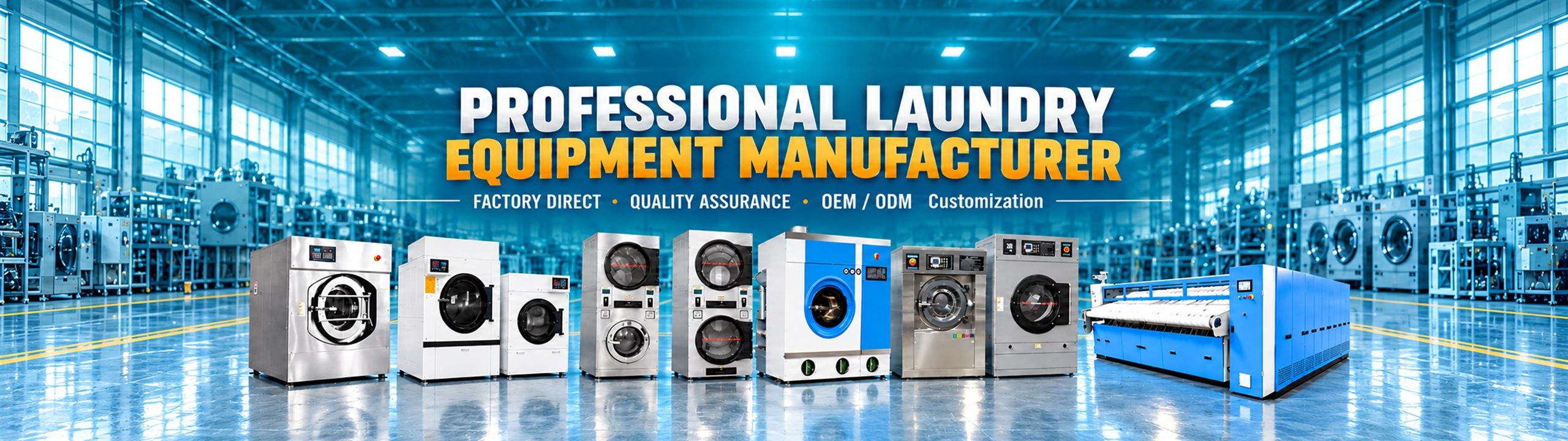
The product range includes standalone coin-operated washers, double-deck dryers, stacked washer-dryers, shoe-washing machines and larger industrial washer-extractors for self-service stores and linen facilities.
Options can include 50 or 60 Hz configurations, suitable voltage and phase, multilingual touchscreens and supported control settings. Compatibility depends on the selected model and order specification.
Technical resources for agents can cover drainage, electrical-supply requirements and programme settings, with specialist work handled by qualified personnel. Factory quotations should define equipment, FOB or other delivery terms, support and any agency arrangements.
Contact XINENGXING with the intended location, utilities, capacity and service needs to request parameter sheets and current cooperation terms. Assess local demand, costs and compliance before committing to an investment.